A house has many builders.
It needs one system.
Design, production, construction and operation often work separately. At every handover, data has to be gathered again, decisions agreed again and the person responsible found again.
Information breaks off
Different project versions and separate documents make it harder to hand the result to the next participant.
Connections stay out of sight
A local task is closed, but the decision's effect on the cost, timing and maintenance of the house is not always taken into account.
Value is lost
Without a history of materials and components, it is harder to repair the house, change it and reuse its elements.
Everyone passes it on. The link to the whole is lost.
This is the problem of a fragmented model: movement in one direction, separate teams and gaps between stages.

Resource
Purchasing raw materials
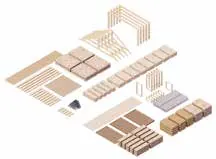
Design
Handing over documentation
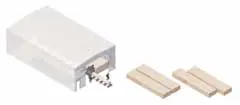
Production
Manufacturing elements
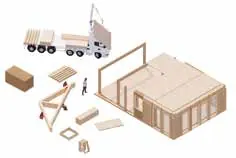
Construction
Assembly and handover
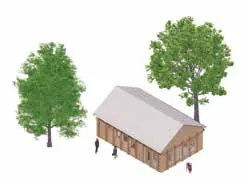
Operation
Maintenance kept separate
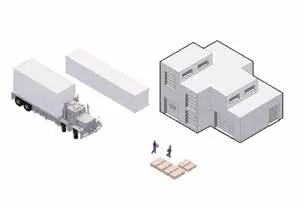
End of cycle
Loss of data and value
The diagram shows the problem of a disconnected process. It does not mean that every linear project necessarily works this way.
At the centre is IPPA 11. The shared result is the house.
Our approach is to connect participants around a shared product, its data and the rules for handing over results. Decisions from operation feed back into design, production and training. Click a centre to open its description.
The composition is adapted from the diagram “Production process / A circular logic”, EFFEKT, CLT Demo House, p. 27. The names and functions of the 11 centres come from the IPPA Eco Development industry model. Centre illustrations are conceptual.
The ring shows how the centres interact, not a fixed order of work. It is a diagram of the proposed process organisation.
Agree. Hand over. Confirm. Feed experience back.
The lead contractor is responsible for delivery under the contract with the client. The IPPA 11 platform provides roles, tasks, data, versions and confirmations.
A shared house passport
We link design decisions, the list of components, document versions and the change history to a specific property.
Clear handovers
For each handover between participants, we define who is responsible, what the result contains and the acceptance criteria.
Two-way connections
Calculations and operating experience refine the original brief before construction starts.
Feedback
Requests, maintenance and user experience become input data for the next project.
For each project, the data set, roles and conditions for reusing components are specified in the project and the contract.
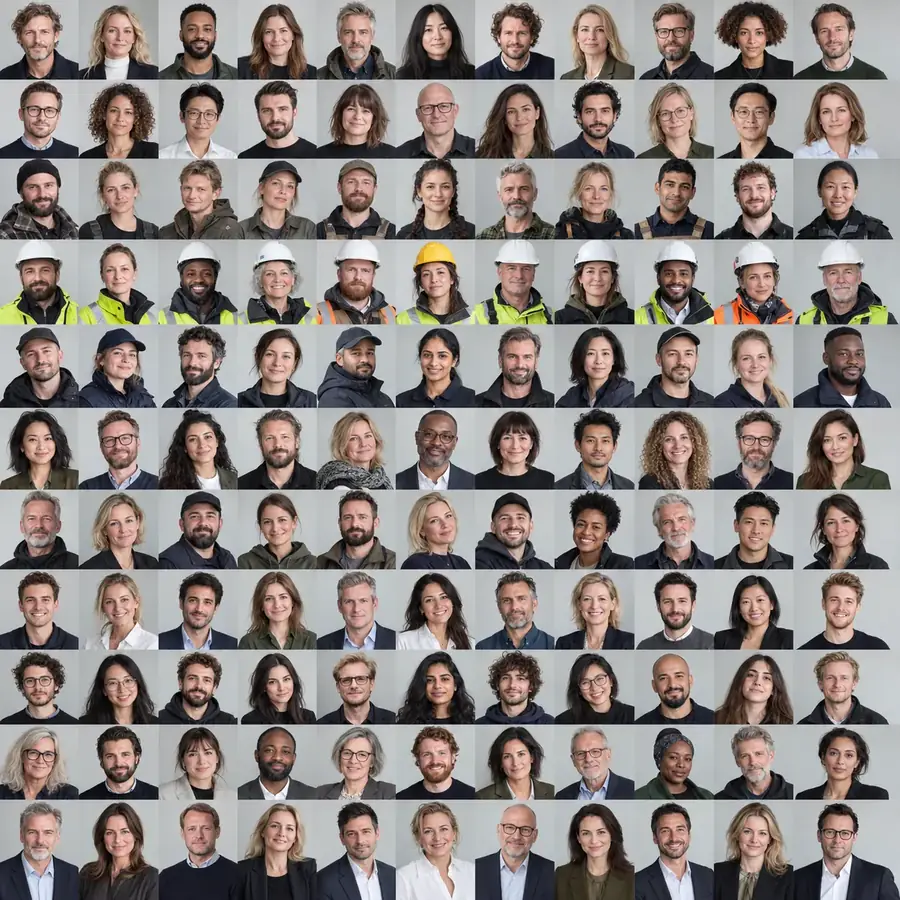
11 centres × 11 roles.
121 roles: who does what and what result they hand over. For each task, we bring together participants from different centres — specialists, manufacturers, suppliers and crews.
The role map is a demonstration and does not mean 121 specialists have been hired. People are trained by the training centre: from crews to the client school.
Knowledge and documents.
The result of each project becomes a scenario for the next piece of work. AI helps prepare decisions; control stays with people.